How Cannes Lions 2026 Redefined Creator Marketing
The creator economy is expected to reach $313.95 billion in 2026 (Precedence Research). Influencer marketing reached approximately $33 billion globally in 2025, according to Statista. Separately, IAB projects US creator advertising spend, a broader category, will reach $44 billion in 2026.
The investment is already there. Yet many brands still manage creator content as a short-lived social post rather than a media asset.
Most Instagram posts receive 75% of their total comments within 48 hours of publication (Imagine It Studios). After that initial window, content is pushed down the feed and rarely given a meaningful role beyond the platform where it first appeared.
The strongest campaigns treat the original post as the start of the media plan, rather than the end of the creator partnership.
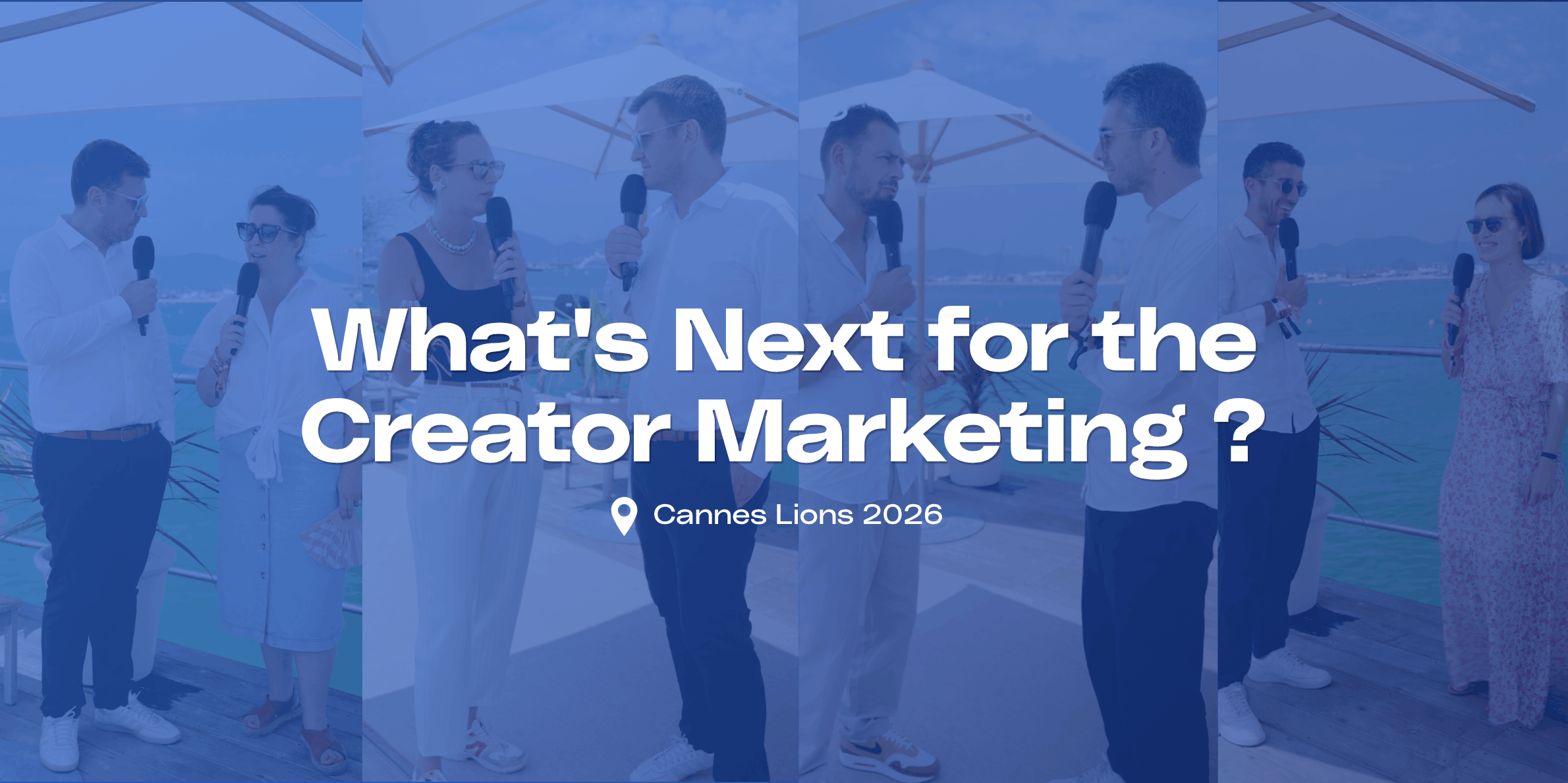
Cannes Lions 2026
At the Dentsu Beach, Jenny Monteiro, Global Client President at Dentsu X, captured the shift:
“The connections between the creator universe, influence and physical experiences are multiplying. This in real life dimension is particularly interesting for us.”
Creator content is moving beyond social into media, commerce, and physical experiences.
That changes how brands plan distribution, formats, rights and measurement from the start.
3 takeaways from Cannes showed what comes next.
Creator Marketing Has Outgrown Its Operating Model
Speaking with Minted at Cannes Lions 2026, Bruno Latapie, General Manager EMEA at Dailymotion Advertising, described a familiar problem. Creator marketing has become essential, yet the way many brands manage it remains fragmented.
Linqia’s 2026 enterprise study found that 79% of marketers struggle to measure influencer marketing ROI, while 48% identify attribution as their biggest measurement gap.
The issue often sits between the different stages of the campaign. Creator selection, production, usage rights, distribution and measurement are handled by separate teams and partners. Strong content is produced, but much of its value remains locked inside the platform where it first appears.
The channel itself is delivering. CreatorIQ found that more than 8 in 10 marketing leaders generate at least 2x ROI from their creator programs.
The opportunity now lies in extending the life, reach and commercial value of the content brands already pay to produce.
Creator marketing does not need more proof. It needs a stronger operating model.
The Best Creator Campaigns Are Built to Travel
Zalando offered a clear example at Cannes Lions 2026.
Speaking with Julian Gellier, VP Sales France at Dailymotion, Solène Mallet, Head of Marketing Western Europe at Zalando, described a Star Academy activation that brought 7 leading French creators into the program’s castle for 24 hours. The idea then moved beyond social and became a full episode on TF1 Plus.
“The idea is really to work influence in a 360 way, throughout the funnel.”
That is where the value of creator content starts to expand. One idea can serve several audiences, formats and stages of the campaign; provided distribution is considered from the start.
Brands are already moving in that direction. 73% now repurpose creator content across several channels (PR Newswire, 2025).
The intention is clear. The harder part is building the rights, formats, and distribution plan that allow the content to move properly.
A creator partnership should produce more than a post. It should create an asset that can work across the wider media plan.
B2B Influence Is Becoming a Serious Media Channel
Creator marketing is also gaining ground in B2B, where credibility often matters more than scale.
TopRank Marketing found that B2B influencer adoption rose from 34% in 2020 to 85% in 2023. Ogilvy also found that 93% of CMOs plan to increase their use of influencers in some form.
At the Dentsu Beach, Bruno Latapie explored this shift with leaders from Generali France and Qonto.
Rodolphe Pachot, Marketing and Digital Director at Generali France, described creator marketing for professionals and small businesses as a “current strategic priority“.
Kim Tran, VP Marketing at Qonto, explained the company’s approach:
“We primarily address entrepreneurs and creators. The idea is to identify creators who are themselves entrepreneurs, then associate them with cultural moments to fit naturally into their professional daily life.”
This is where B2B influence earns its place. The right creator brings expertise, trust, and access to a specific professional community.
Your creator content was built to do more. Make it travel further, last longer, and work harder across every channel.